The short answer
A glove can be useful. It is not a replacement for every brush or comb.
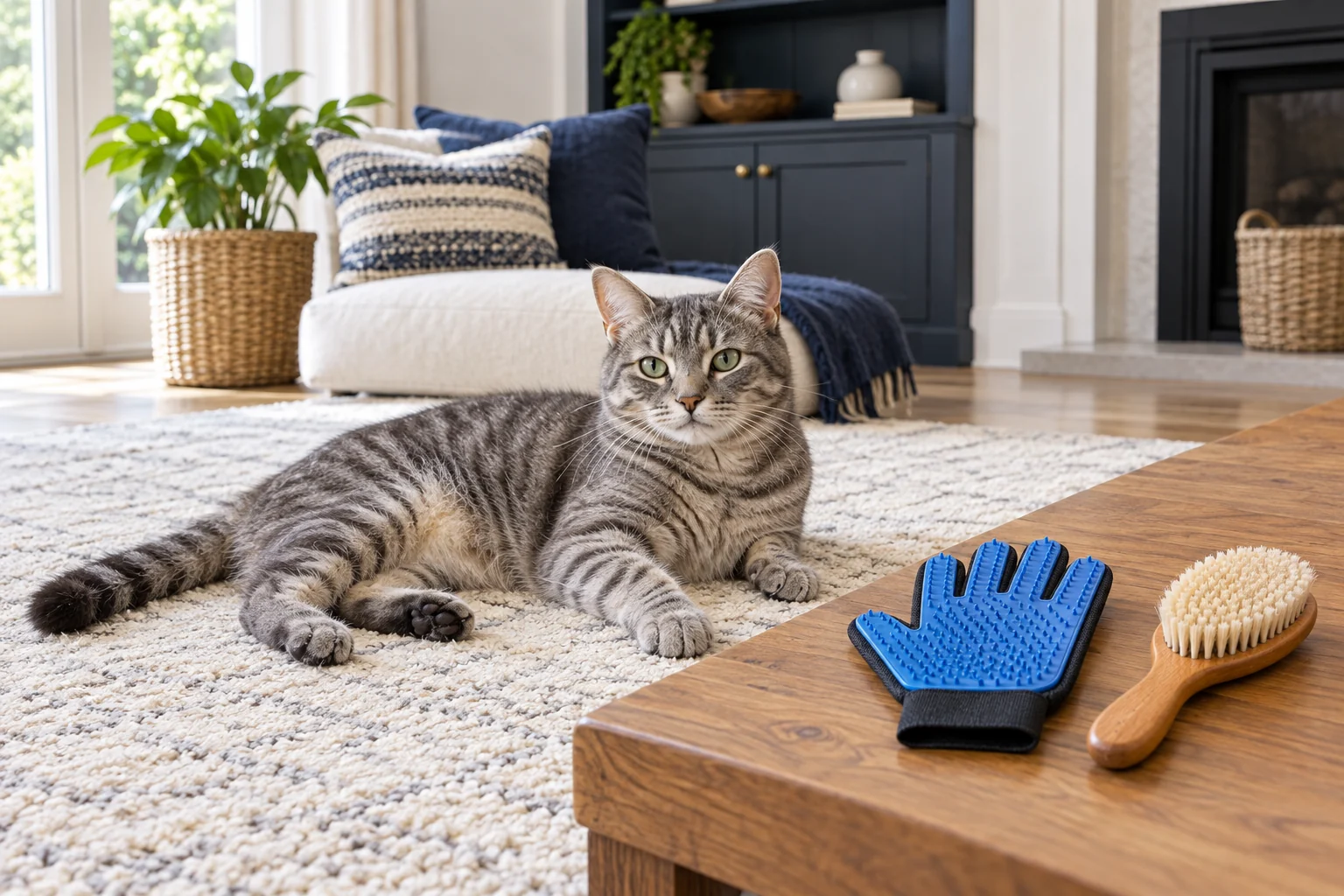
For loose hair on a short coat, a grooming mitt or a suitable soft brush can be reasonable. Some cats prefer a mitt, but that preference is not guaranteed. A longer coat may need a comb that reaches through the hair. Cats Protection makes this distinction by coat and individual preference.
Choose the tool for the job you can describe, then watch the cat's response. If the coat is already maintained comfortably, you do not need to buy both. If there is a tight mat, soreness or a new grooming change, pause the shopping decision and seek appropriate help.
“Brush” is not one type of equipment
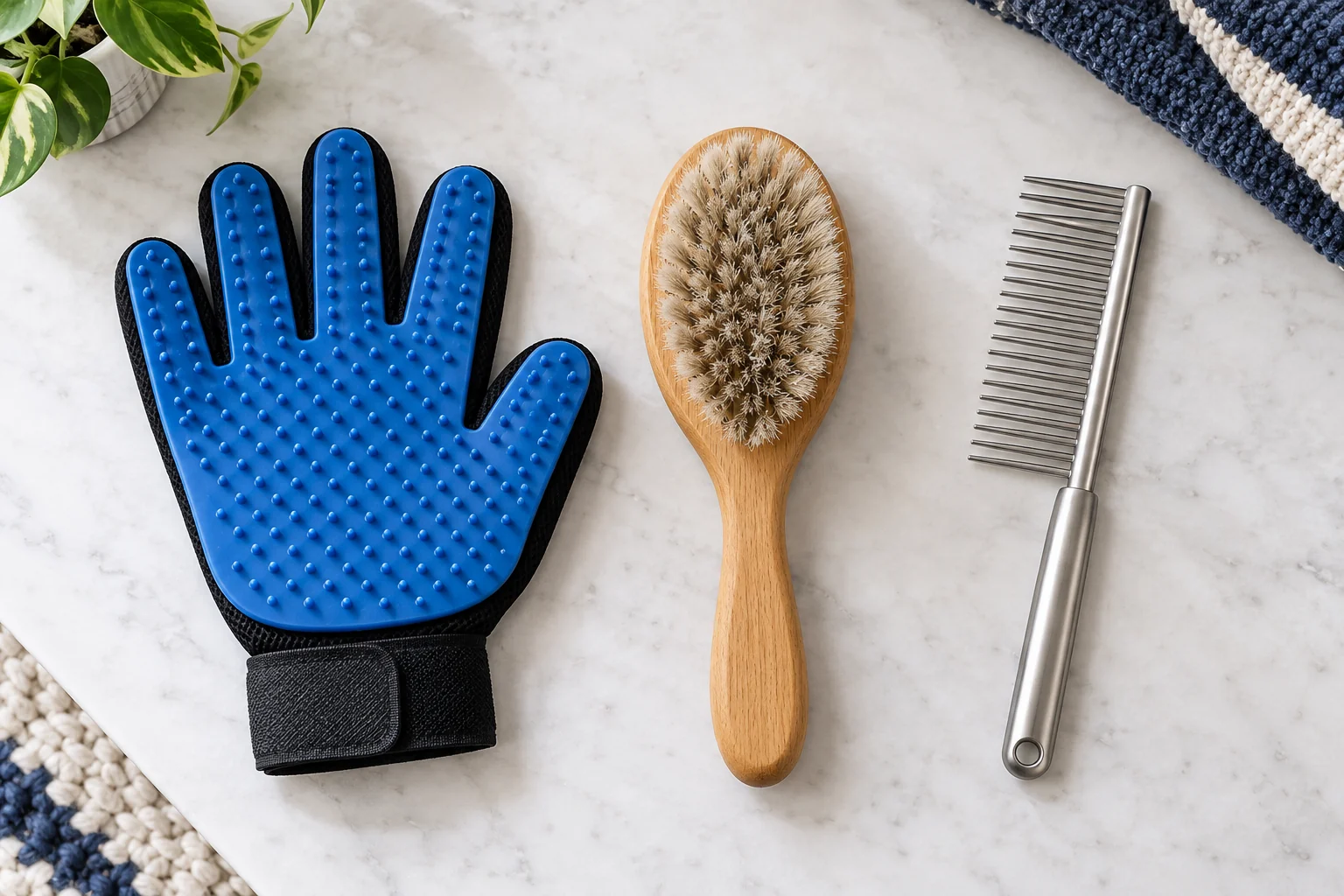
A rubber mitt, a bristle brush and a metal comb may share a shop category without doing the same work. That makes a blanket claim such as “brushes remove more hair” hard to interpret: which design, on which coat, used how?
Grooming glove or mitt
A hand-worn tool with a textured grooming surface. It offers a stroking-style movement. Treat “feels like petting” as something to find out with your cat, not a result the packaging can promise.
Brush
A broad label covering bristles, pins and other designs. VCA associates bristle brushes with short coats and long-toothed tools with longer hair. A handle or self-cleaning button says little about suitability by itself.
Comb
A separate tool with individual teeth, useful when the task calls for more targeted access. Cat Friendly Homes describes rounded-tip grooming combs and stresses finding equipment the individual cat accepts.
These distinctions draw on VCA's coat-care guidance and Cat Friendly Homes' tool guide. Neither provides a measured glove-versus-brush performance ranking. Our FURminator versus Oneisall LM2 comparison covers the different question of a specialist de-shedding edge versus collecting hair with suction.
Compare the job before comparing the price
| What you need | Glove or mitt | Brush or comb | What still needs checking |
|---|---|---|---|
| Routine short-coat care | A possible option if the cat accepts its surface. | A suitable soft or bristle brush is another option. | The actual response, not a “gentle” label. |
| Access through longer hair | Do not assume collected surface hair proves adequate reach. | A coat-appropriate long-toothed comb or brush may be needed. | Whether the required areas are accessible without tugging. |
| Introducing an unfamiliar tool | Can be offered gradually if ordinary touch is welcome. | Also needs a gradual introduction. | A quiet cat is not automatically a comfortable cat. |
| Tight or painful matting | Not a reason to press harder. | Not a reason to select a more aggressive tool. | Professional help and possible skin problems. |
| An already comfortable routine | No need to add one simply to complete a set. | No need to replace a suitable existing tool. | Whether there is an unmet task at all. |
The rows are an editorial comparison, not a tested scorecard. We have not measured hair removal, pressure, skin irritation or acceptance rates. The ASPCA describes a rubber brush as useful for removing dead hair from short coats, but that does not establish that every glove outperforms a brush. Read its grooming guidance.
A smooth-looking surface can leave the real question unanswered
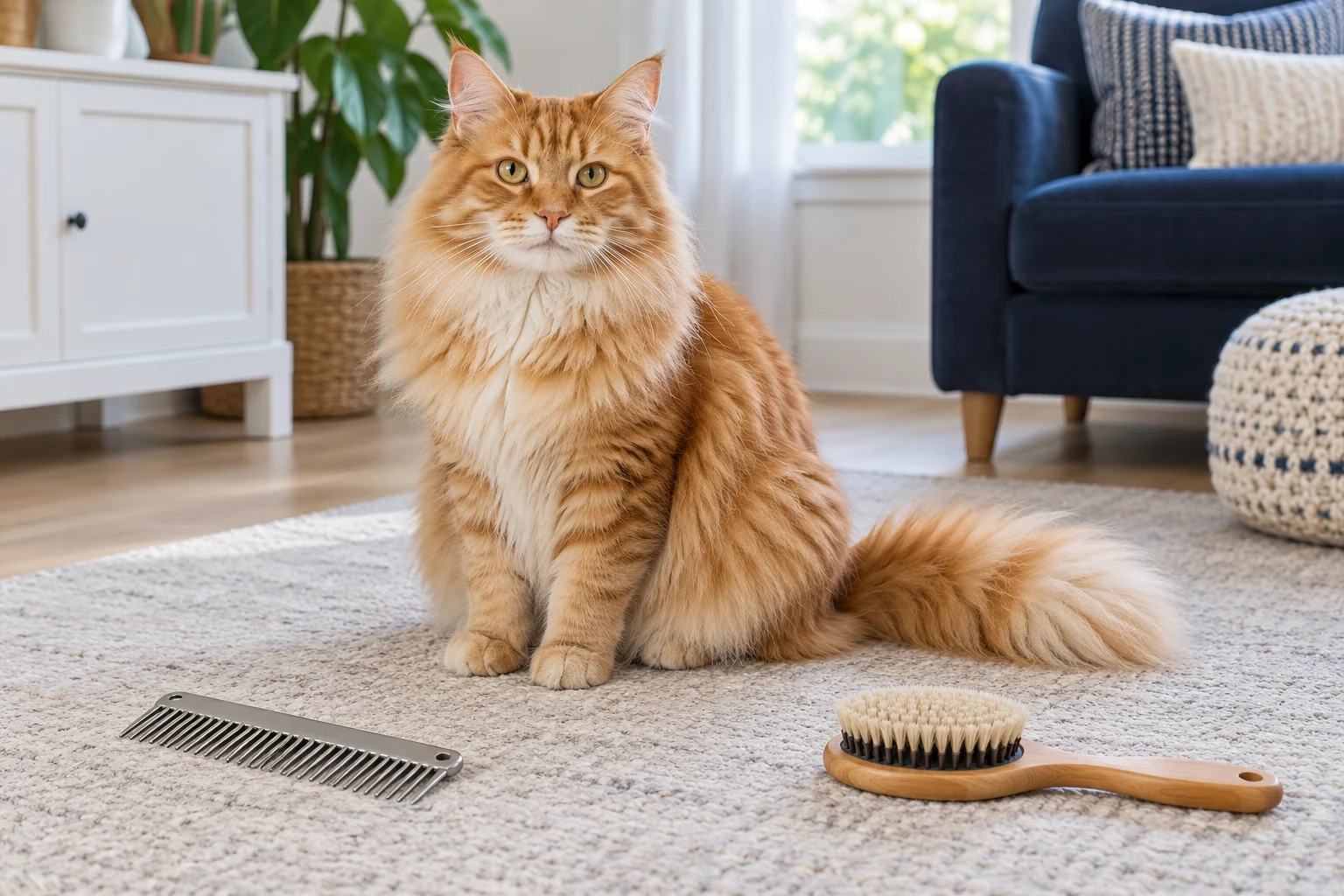
VCA recommends more frequent care for long, silky or curly coats and describes checking areas where tangles can develop. It also warns against pulling and recommends professional care for severe or extensive matting. Its advice is about access and condition, not producing the largest pile of fur.
For a longer coat, ask your veterinary team or a cat-experienced groomer to show you a suitable tool and how to use it on this cat. “The glove came back covered in hair” does not answer whether the areas that need attention were reached. Conversely, a nearly clean tool is not permission to keep repeating passes until it produces a more satisfying result.
Keep those observations separate. You may have collected loose hair, left some areas unchecked and ended the session because the cat moved away. That is an honest description of a partial session, not a failure to be corrected with more pressure.
If your cat dislikes the brush, change the introduction too
Animal Care Centers of NYC suggests a grooming glove as a possible introduction for a cat that dislikes brushing. Its advice starts with a calm cat, a small amount of gentle contact and a reward, stopping if the cat becomes uncomfortable. It is a gradual option, not proof that a glove will overcome fear.
Keep the first attempt easy to end. Let the cat investigate the tool. If normal touch is welcome, make brief, gentle contact over an area the cat already accepts, then pause. There is no requirement to finish the whole coat in one sitting or to progress to a brush on a fixed timetable.
Cat Friendly Homes favours a predictable routine with frequent short sessions rather than occasional prolonged grooming. A food reward may help, but rewards need not all be food. Take account of what the individual cat values.
If your cat is uncomfortable with ordinary touch in that area, do not assume a glove will solve it. Leave the area alone and seek advice about the difficulty, especially if this response is new. There is no need to touch a sore area deliberately to complete a checklist.
Buying a different texture is only one change. The place, handling, timing and length of the session also matter. Avoid changing everything at once if you want to understand the response. If routine care remains impossible without a struggle, ask for help rather than shopping through increasingly forceful tools.
The two-check grooming note
Our practical addition is a short record with two separate questions: what coat care was completed, and what contact did the cat accept? Do not merge them into a single “good session” score. A tolerated tool may not cover the necessary job; an effective-looking pass may still be unwelcome.
Copy this into a paper note or your phone
- Tool and area
- Which exact tool? Which part of the coat did you work on?
- Coat observation
- Loose hair collected, area checked, snag encountered or area not yet checked?
- Cat response
- What did the cat do before contact, during it and after the pause?
- Why you stopped
- The intended small task was complete, the cat left, or something was uncertain?
- Next step
- Keep the routine, make the introduction smaller, or ask for help?
Example, not a case report: “Soft brush, shoulders only. Some loose hair collected. Cat stayed nearby, then walked away. Stopped there. Rest of coat not checked.” This records an observation without inventing comfort, a completed full-body groom or a reason to buy a stronger brush.
If you try another tool on a later occasion, note that the sessions are not a controlled experiment. Coat condition and the amount of already-loose hair may differ. Do not compare the size of two fur piles and turn the result into a removal percentage. The note helps you explain a routine, including to a professional, rather than certify a product.
Sometimes the next step is neither tool
Do not cut out a mat with scissors
A tight, extensive or painful mat needs professional assessment. A mat can sit close to the skin, creating a risk of accidental cuts. Do not pull through it or attempt to prove a product works. VCA warns against scissors and recommends professional care for severe matting.
New bald patches, damaged skin, excessive grooming or an unexpected drop in grooming warrant a veterinary discussion. Cat Friendly Homes explains why changes in personal hygiene matter. A senior cat struggling with coat care may need help for more than a tool preference; do not label the problem “stubbornness”.
For handling problems without obvious injury, tell the professional what happens, where it happens and what you have already tried. A short note about a specific response is more useful than “hates every brush”. Do not keep provoking the response to capture a better example.
Buy for an unmet task, not an impressive demonstration
Before paying, write one sentence: “I need a tool to help with ___.” If the blank is only “less hair on the sofa”, separate coat care from cleaning upholstery. A household hair-removal tool is not automatically suitable for use on a cat.
- Identify the working surface. Read whether the item is a soft brush, comb, rubber mitt or specialist cutting/de-shedding design. A multi-function name can hide important differences.
- Find the instructions. Check intended coat types, how the maker says to use it and how to clean and dry it. Do not assume every wooden handle, pad or fabric backing is washable in the same way.
- Inspect before contact. Reject damaged teeth, loose pieces or rough edges. Check the condition again during normal upkeep.
- Check handling and returns. Consider whether you can control the tool comfortably. Read the actual seller's return terms, especially for an opened grooming item.
Our separate cat nail clippers versus grinder guide addresses claw-care tools. A grooming bundle need not be your starting point just because it contains both. You can keep a suitable existing brush and buy nothing today.
Optional equipment searches
These links let you investigate the two manual categories once you know the task. They are not a shortlist of tested or veterinarian-approved models. Search results can include unrelated designs: check the exact product rather than trusting the search label.
Affiliate disclosure: As an Amazon Associate I earn from qualifying purchases. Félinscope may receive a commission from eligible purchases through these links. Choose your local store and verify the seller, delivery and return conditions. How our affiliate links work.
Optional affiliate category searches, not product tests. A glove is not a treatment for matting or damaged skin. You do not need to buy both categories.
Common questions
Do grooming gloves work for short-haired cats?
They can help collect loose hair and suit some cats. They are one option alongside an appropriate brush, not a guaranteed preference. Consider whether the cat accepts the contact and whether the intended coat care is actually being completed.
Can a glove be the only tool for a long-haired cat?
Do not assume so. Collecting hair at the surface does not establish access through a longer coat. Ask for a demonstration of coat-appropriate combing or brushing if you are unsure which areas need attention or how to reach them safely.
Why does my cat dislike a glove but accept my hand?
A glove changes the contact. Resembling a stroking motion does not make the texture or sensation identical. Stop rather than treating the cat's ordinary enjoyment of touch as consent to every grooming tool.
Should I groom until no more hair comes off?
No. We do not use an empty-tool endpoint. Follow appropriate instructions and the cat's response, not a target pile of hair. Repeated passes are not a substitute for identifying the required task.
Will a glove prevent hairballs?
This comparison does not establish a prevention effect for either category. The ASPCA discusses brushing as part of coat care, but its guidance is not a trial of gloves against brushes. Recurrent vomiting or other health concerns need veterinary advice rather than a grooming-product promise.
How we checked this comparison
We reviewed the sources below on 30 September 2026. They support the distinctions between coat types, tools and handling, but we did not identify a head-to-head study here that establishes a universal winner. No grooming products were tested by Félinscope and no veterinarian reviewed this article. The comparison table and two-check note are our editorial synthesis, not a validated clinical assessment.
- Cats Protection: grooming your cat. Coat length, equipment options and individual preference.
- VCA Animal Hospitals: grooming and coat care. Tool reach, coat condition and the boundary around matting.
- Cat Friendly Homes: grooming tools and essentials. Distinct tools and finding an accepted routine.
- Cat Friendly Homes: grooming tips. Short sessions and changes that deserve veterinary attention.
- ASPCA: cat grooming tips. Routine coat care and rubber brushes for short fur.
- Animal Care Centers of NYC: feline grooming tips (PDF). Gradual introduction of a glove and stopping when uncomfortable.
The three images are AI-generated editorial illustrations, not evidence of a product's performance. For our evidence and commercial boundaries, see who writes Félinscope and our transparency policy.