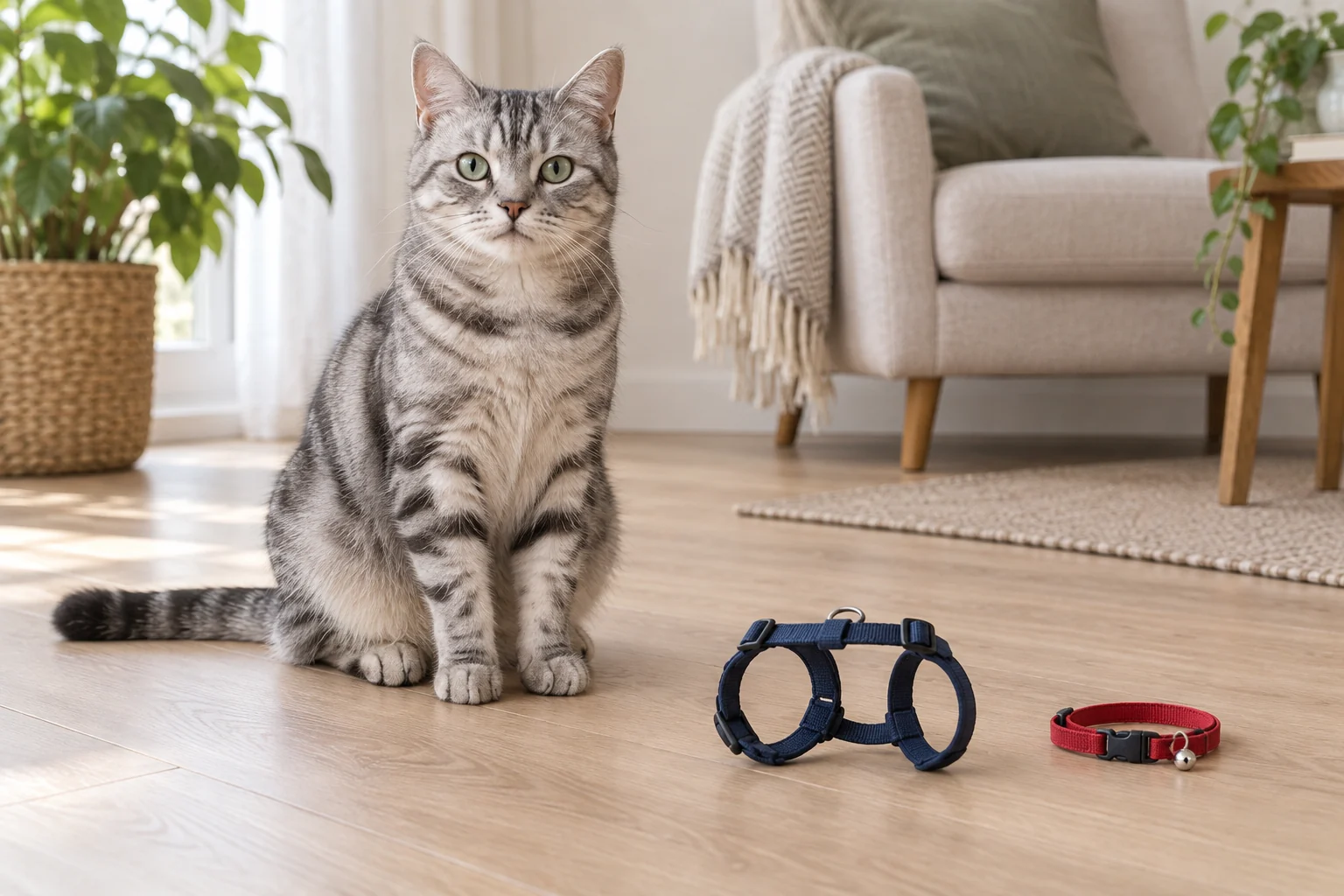
The short answer
For lead attachment, a cat harness is the appropriate category, not a collar. A collar can slip off or put pressure on the neck. A suitable cat harness has a different job, but does not make a walk necessary or guarantee that a cat cannot escape. Cats Protection explains the equipment distinction.
If your cat dislikes the harness, do not switch to a fixed collar to keep walking. Pause the plan. You can choose indoor enrichment without attempting an outing. If you only need visible identification, start with our breakaway versus non-breakaway collar guide, not a harness purchase.
The useful order is: decide the job, consider your cat's response, read the exact fitting instructions, then assess the setting. A product listing cannot complete those steps for you.
A collar and a harness are not interchangeable
A visible ID collar helps someone read contact information. A harness provides the attachment used during supervised lead activity. This difference matters before comparing fabric, padding or price. The Cat Protection Society of NSW factsheet says not to attach a lead directly to a collar, and describes a harness as transferring lead pressure to the shoulders and chest rather than the neck. That is guidance about equipment purpose, not proof that every harness design performs equally.
| Question | Identification collar | Cat harness |
|---|---|---|
| What job are you choosing it for? | Visible identification, if a collar is suitable for this cat. | Supervised lead attachment, if that activity is suitable. |
| Where does the lead attach? | It does not. An ID ring is not an invitation to use a lead. | The attachment specified by the maker for that exact model. |
| What must be checked? | The cat-specific release mechanism, fit, condition and accessories. | Model instructions, measurements, adjustment, movement and response. |
| What does buying it fail to establish? | Permanent identification or suitability as restraint. | Escape prevention, comfort outdoors or a need for walks. |
| What if the cat dislikes wearing it? | Reconsider the individual collar decision. | Stop or step back. A collar is not the fallback walking restraint. |
Cats Protection recommends a quick-release or snap-opening collar if a collar is used, and advises against elasticated designs. It also distinguishes a collar from a registered microchip, which remains an identification method when the collar is absent. Do not disable a release mechanism because you want the lead to hold. For everyday buckle choices and the collar evidence, use the separate comparison linked above.
The better equipment does not automatically make the better outing
Welfare organisations do not all frame harness walking in the same way. PDSA advises against routine lead walks, describing the difficulty of being restrained near unfamiliar places, traffic or animals. The San Francisco SPCA handout is more supportive of gradual harness training, but also directs fearful cats towards indoor enrichment. These are practical guidance documents, not a head-to-head trial proving which cats benefit from a walk.
The NSW factsheet narrows its training advice to suitable relaxed, outgoing cats in appropriate surroundings. It warns against pushing anxious or shy cats into the activity. We therefore do not translate a photograph of an adventurous cat into a rule for your household, or promise that every reluctant cat will eventually enjoy it.
You want to give an indoor cat more to do
That is a reasonable aim, but buying walking equipment is only one possible response. Start by identifying what is missing: opportunities to play, climb, hide, watch or search for food. The solution may already be available at home.
You want reassurance that your cat will not get lost
A lead is not a guarantee. Think separately about identification, an appropriate environment and what you would do if the outing had to end. A location tracker also does not make unsuitable gear or a frightening setting acceptable.
It is possible to decide against an outing after buying a harness. That is not a failed project. It is a better use of the information your cat has given you than trying to justify the purchase.
Read the instructions for the harness you would actually receive
“Small cat”, “adjustable” and “escape-proof” are not fitting instructions. Before ordering, find the exact model name and its measurement diagram. Check which part of the body each measurement refers to, the adjustment range, the fastening arrangement and the intended lead connection. If a retailer mixes photographs or size tables from several versions, ask for clarification instead of choosing from the most convenient number.
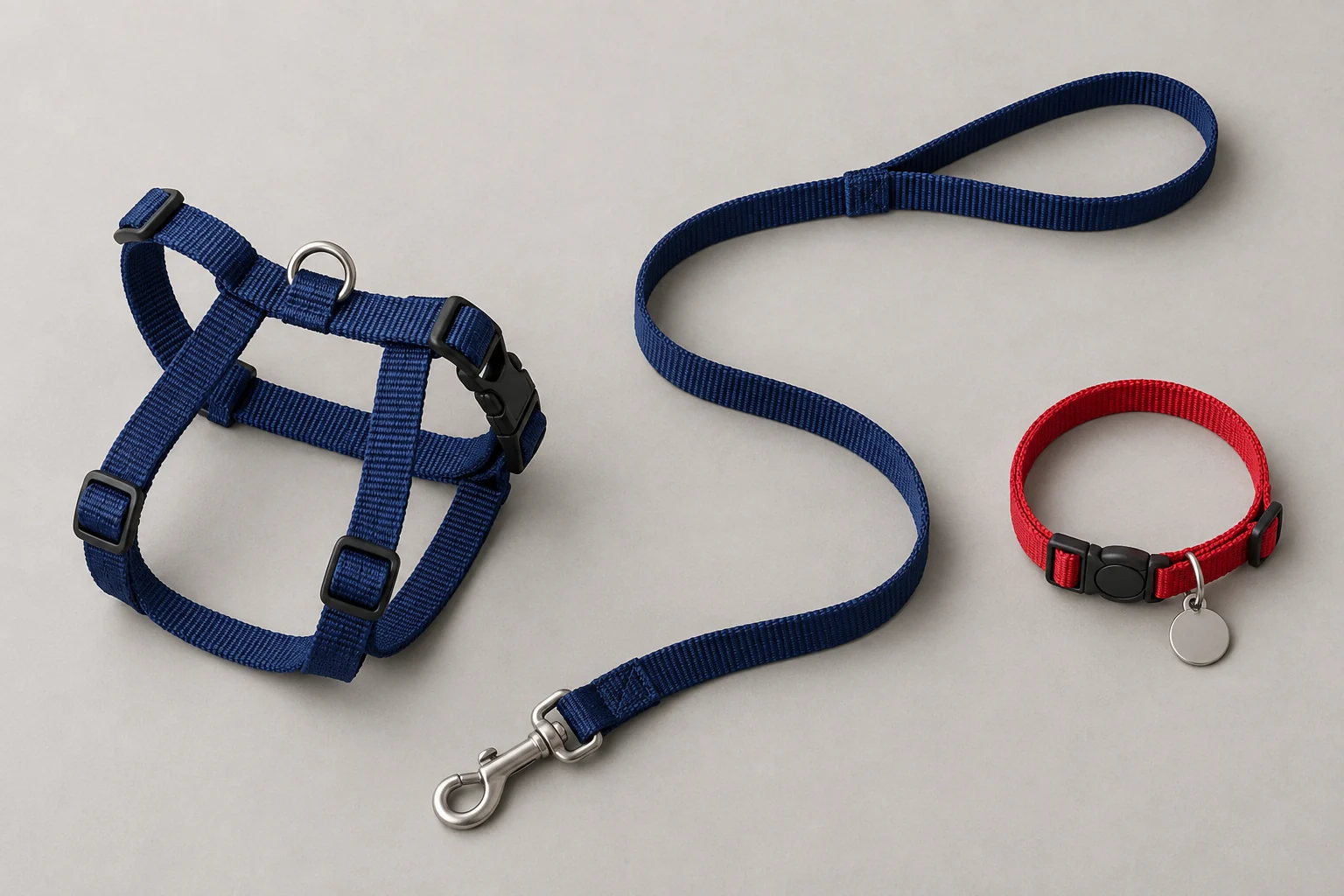
Cats Protection advises using a cat-specific harness and reading its instructions. The SFSPCA handout describes a back attachment rather than one at the neck. For a particular purchase, locate the maker-designated connection and follow that model's directions. If you cannot identify it confidently, the setup is unresolved.
Our practical shopping checklist is deliberately document-first:
- Measure the requested locations. Do not substitute collar size or body weight for a measurement the maker actually asks for.
- Check the whole size range. If your measurements do not clearly fit the instructions, ask the maker rather than inventing a between-sizes rule.
- Look for usable instructions before checkout. An explanation you cannot access until opening the parcel is a reason to ask questions, not to guess.
- Read the return conditions. Determine whether an indoor fitting attempt affects eligibility, and who pays return postage. Terms vary by seller and country.
- Keep the final assembly clear. Adding a tag, tracker or another strap changes what is being worn. Confirm compatibility rather than copying a photograph.
There is no universal finger-clearance rule in this comparison. We cannot verify fit remotely, and appearance alone cannot establish how a harness behaves during movement. Do not pull a cat backwards, suspend them or provoke an escape attempt to “test” the purchase. If movement or fit looks wrong, stop and seek help with the exact equipment.
Make the first decision indoors
Do not make delivery day the first outdoor trial. SFSPCA describes small, rewarded indoor steps: familiarity with the equipment before longer wear, followed by calm lead introduction. Its handout also warns against leaving a cat tied to an object. We use that gradual, supervised principle here, not a fixed number of minutes or a deadline for completing training.
A simple observation note can be more useful than a training streak. Write down the small step you offered, what your cat voluntarily did and what made you end it. “Sniffed the harness and walked away” contains more information than “day one complete”. It need not lead to putting the harness on during the same session.
Keep any introduction easy to end. Cats Protection advises stepping back if the cat appears uncomfortable, keeping the lead slack during any walk and removing the harness afterwards. An indoor response is information about that moment, not a prediction that the cat will behave the same way near a dog or a passing vehicle.
PDSA recommends considering the surroundings and letting the cat set the pace if an outing is chosen despite its cautions. Current identification details and veterinary advice on preventive care are separate preparations, not jobs for a harness. A walking harness is also not a substitute for a carrier: our hard versus soft carrier guide addresses transport equipment.
Stillness is not a completed training step
The SFSPCA handout notes that stalling, crouching or trying to escape may reflect fear. A cat that stops moving has not necessarily accepted the equipment. Do not reward yourself for getting the harness on while ignoring what happens next.
Pause when the response is unclear
Repeated attempts to hide or escape, a crouched posture or persistent immobility are reasons to stop the activity and reassess, not to tighten the harness or pull the cat forward. In a secure indoor space, remove the equipment calmly when you can do so without force. Do not unclip a frightened cat in an exposed outdoor location.
Cats Protection's stress guidance explains that distress can be subtle and can overlap with pain or illness. Read the whole situation rather than diagnosing a cat from one ear position or pupil size. A new or persistent change in behaviour deserves veterinary attention; qualified behaviour support may also help. This page cannot establish whether equipment, fear or a health problem explains a particular response.
Work out what remains unresolved
The check below separates an identification decision from an optional walking plan. For lead use, it brings a known concern forward even if you have not answered everything else. A quiet setting does not cancel an uncomfortable cat, and an expensive harness does not cancel missing instructions.
Walking Setup Check
Five questions to organise the decision. Nothing is preselected. Choose an unknown option when appropriate. This is an editorial aid, not a fit assessment, veterinary advice or permission to take your cat outside. Your answers are not saved or sent anywhere.
The questions and their ordering are Félinscope's editorial organisation of the guidance, not a validated clinical scale. No points are awarded. Choosing “unknown” is useful information, and changing any answer clears the previous result.
There is a good option without a lead
For a permanent outdoor space, our catio versus physical cat-proof fencing comparison examines the complete boundary and daily entrance routine. That is a different decision from supervised lead use.
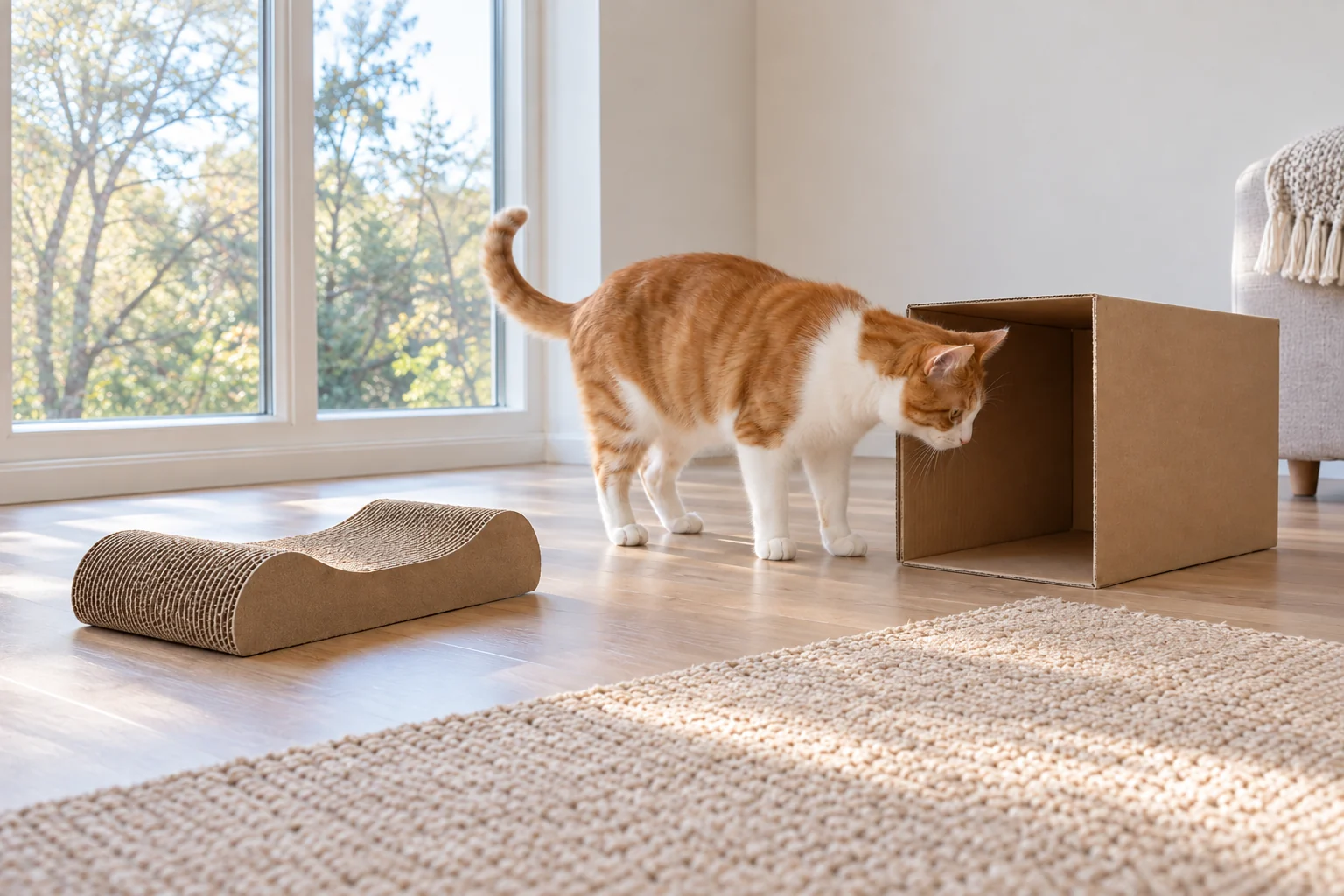
The 2025 Cats Protection safety booklet discusses enriching the home and considering an appropriately secured outdoor area instead of harness walks. It describes opportunities for play and food exploration. That does not mean every enclosure or garden fence is secure, or that access should be changed without considering the individual cat and surroundings.
Choose one need to address rather than buying a collection of accessories. If your cat seeks interaction, compare automatic toys with human-controlled wand play. If you want food-based activity, our puzzle feeder versus slow-feeder guide keeps actual food access in view. For room layout, cat trees versus wall shelves considers the complete route, not just height.
You can use familiar equipment first. The important question is whether the cat uses the opportunity comfortably, not whether you have replaced a harness purchase with another purchase.
Optional shopping, once the purpose is clear
If you still want to investigate equipment, compare accessible maker instructions before prices. Harness searches below concern supervised lead equipment. Collar searches concern visible identification only. ID collars are never lead restraints. A result appearing in a retailer search is not evidence that it fits your cat or matches the welfare guidance.
Affiliate disclosure: As an Amazon Associate I earn from qualifying purchases. Félinscope may receive a commission from eligible purchases through the country-labelled links below. These are optional category searches, not models we tested, verified stock or a promise of delivery. Read our affiliate policy.
Affiliate category searches. ID collars are never lead restraints. Check the exact model, maker instructions, seller, local delivery and returns. A search result is not a fitting recommendation.
Questions answered
Can I clip a lead to a collar just for a short outing?
No. The purpose of the equipment does not change with the intended length of the outing. Use suitable cat harness equipment if lead activity is appropriate, not a breakaway collar or a fixed collar substituted to hold the lead.
Does my cat have to wear both a collar and a harness?
There is no universal “buy both” rule here. Consider visible identification separately, and check that any components worn together are appropriate and compatible. Neither piece replaces current microchip registration details.
Which harness style is escape-proof?
We have not established an escape-proof style. A vest photograph, a label or an online review cannot verify the exact fit on your cat. We do not rank shapes by invented escape rates or treat a completed checklist as proof.
What if my cat wears a collar happily but rejects the harness?
Acceptance of one item does not establish acceptance of another. Do not attach the lead to the familiar collar instead. Pause, consider the response and choose another form of enrichment if appropriate.
How long should harness training take?
This guide sets no completion date. A calendar cannot tell you whether a cat is comfortable. Progress, if any, depends on the individual response; stopping is a valid result rather than evidence that you need to push harder.
How we checked this comparison
Sources checked 28 September 2026. We reviewed the guidance below and separated its practical recommendations from our shopping questions and decision aid. No harness, collar or lead was tested on a cat, no escape rate was measured, and no veterinarian reviewed this article. The three images are AI-generated editorial illustrations, not product or field-test photographs.
The sources take different positions on routine outings. We preserve that distinction while using their shared warning against collar lead attachment. We found no basis in these documents for certifying an individual fit or promising a training result. Source publication dates and upload folders are not treated as new studies.
- Cats Protection: harness and lead advice. Published January 2024. Equipment use and the reasons routine walks may be unsuitable.
- Cats Protection: Keeping your cat safe, 2025 booklet. Harness cautions and alternatives, pages 12 to 14.
- PDSA: walking a cat on a lead. Published October 2024. Welfare cautions and conditional preparations.
- Cat Protection Society of NSW: harness and lead training. June 2021 factsheet. Individual suitability and the collar attachment boundary.
- San Francisco SPCA: Cat Leash Training. Two-page training handout; different framing of potential benefits, with supervision and fear limitations.
- Cats Protection: recognising cat stress. Behaviour in context and when professional help is needed.
- Cats Protection: choosing a cat collar. Identification and quick-release collar guidance.